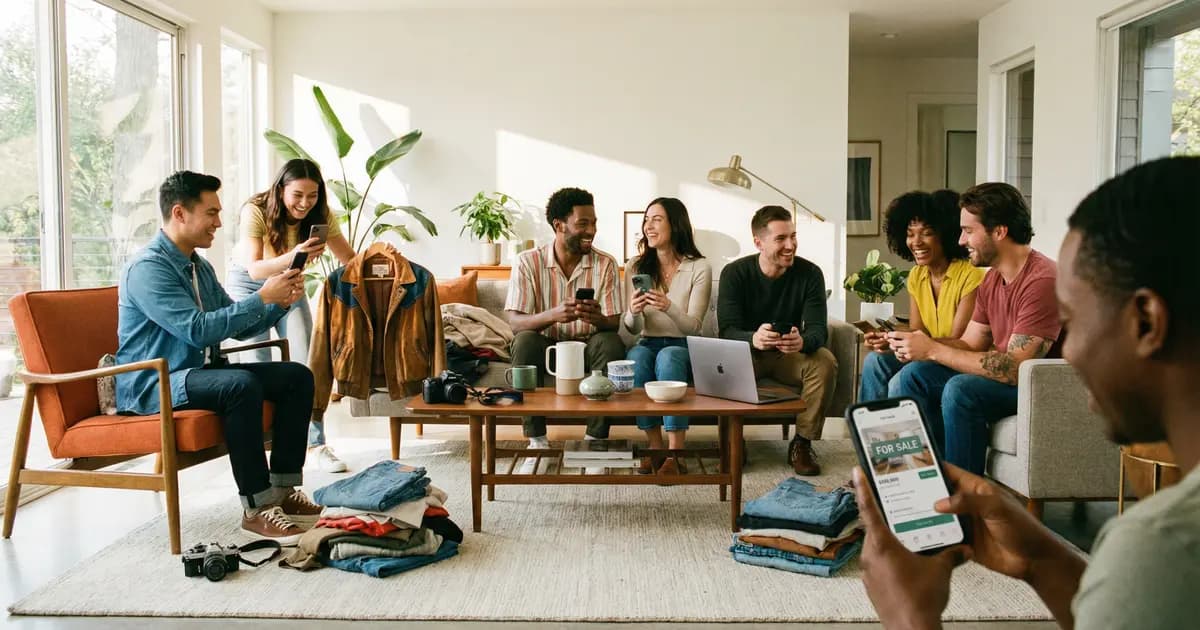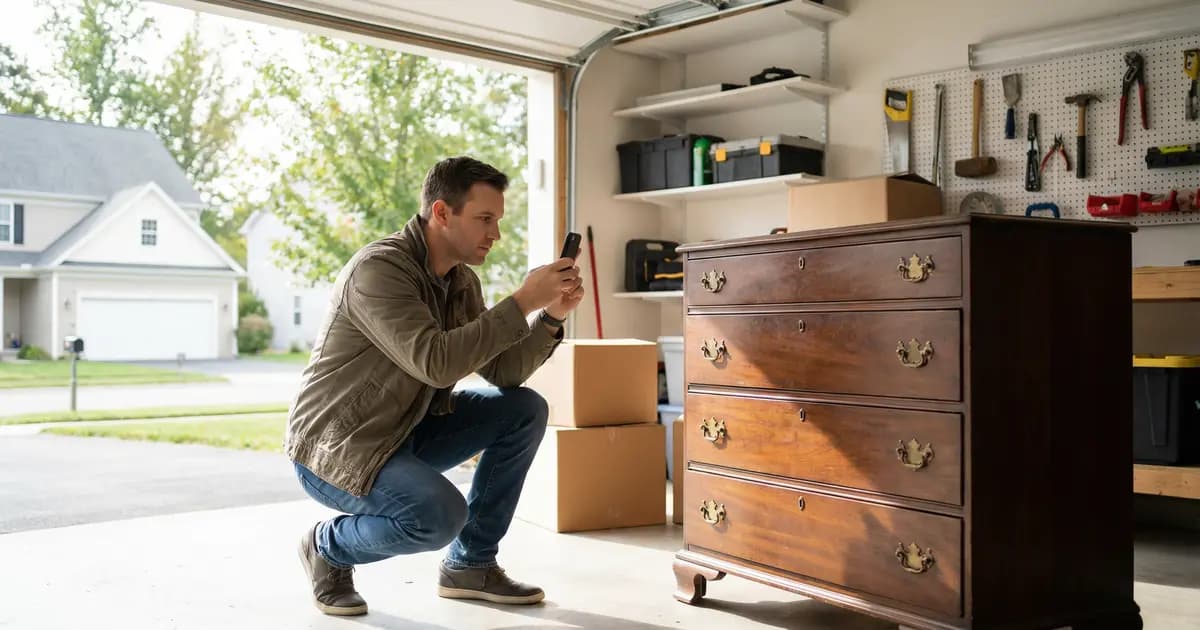
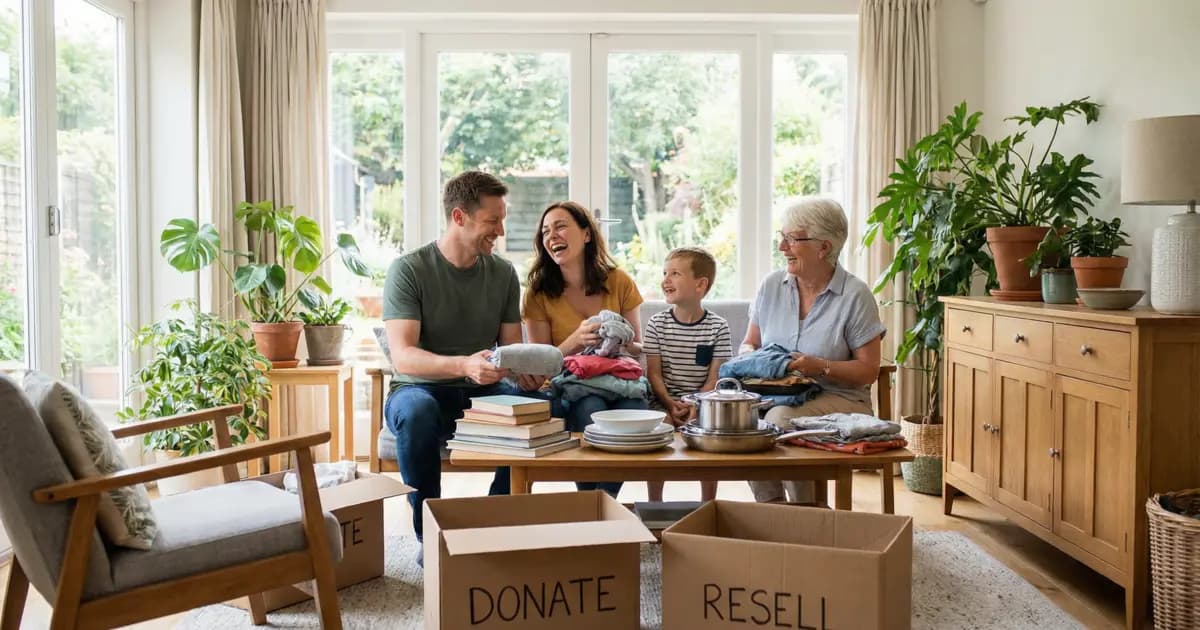
Every time you sell something instead of throwing it away, you're making an environmental impact that's larger than you might realize. The US secondhand market reached $56 billion in 2025, growing 5x faster than traditional retail—and for good reason. Buying used reduces carbon emissions by 25-91% depending on the product, saves thousands of gallons of water, and keeps millions of tons of perfectly good items out of landfills.
This isn't feel-good environmentalism. It's backed by hard data from the EPA, academic research, and lifecycle assessments. Here's what actually happens when you choose to sell or buy secondhand.
The Carbon Footprint Reductions Are Significant
Clothing: 25-70% Lower Emissions
Wearing secondhand clothing instead of new reduces carbon emissions by 25% according to ThredUp/Green Story research. A 2023 EuRIC lifecycle assessment found secondhand clothes have 70 times lower environmental impact than new clothing.
The numbers per item tell the story:
- One new t-shirt produces 6.75 kg (15 lbs) of CO2
- One pair of jeans generates 20-33 kg (44-74 lbs)—equivalent to driving 250 km
- Each quality garment reused saves approximately 3 kg of CO2
For perspective: the average American's new clothing purchases generate 360 kg of CO2 annually. Buying secondhand could eliminate 330 kg (728 lbs) of those emissions.
Electronics: 78-91% Lower Emissions
Electronics deliver even more dramatic savings because 80-95% of a device's carbon footprint occurs during manufacturing, not during use.
Research from Fraunhofer Austria found:
- Refurbished devices result in 78% CO2 savings versus new
- iPhone 11: 72 kg CO2 new versus 15.7 kg refurbished (78% reduction)
- MacBook Air refurbishment saves 83% of emissions
The Back Market platform alone claims its customers have prevented 1 million tons of CO2 emissions by choosing refurbished electronics.
Furniture: 42-80% Lower Emissions
An IKEA/Swedish study found furniture reuse results in 42% reduced climate impacts, with optimized practices achieving up to 80% savings. Office furniture reuse specifically saves 70-90% of carbon emissions.
A reused chair saves 64.80 kg CO2e versus only 6.33 kg for landfill disposal—a tenfold difference.
The Landfill Crisis Is Real
What We're Throwing Away
US municipal solid waste totals 292.4 million tons annually, with half going to landfills.
Textiles:
- 17 million tons of textile waste per year
- 11.3 million tons landfilled (7.7% of all landfill waste)
- Only 13% recycling rate
- EPA estimates up to 95% of landfilled textiles could be recycled
- Average American discards 81.5 pounds of clothing annually
Furniture:
- Over 12 million tons discarded annually
- Approximately 9 million tons reach landfills
Electronics:
- 8 million tons of e-waste per year in the US
- That's 500+ pounds per second
- Only 15% properly recycled
- Discarded electronics constitute 70% of heavy metals in US landfills
When electronics go to landfills, lead, mercury, cadmium, and other toxins leach into soil and groundwater.
Water Savings Are Massive
The fashion industry consumes 93 billion cubic meters of water annually—equivalent to 37 million Olympic swimming pools.
Per-item water usage:
- One pair of jeans: 3,781 liters (1,000 gallons)
- One cotton t-shirt: 2,700 liters (713 gallons)
Research from the Journal of Cleaner Production found that quadrupling a garment's lifespan results in 75% water savings. A 2024 projection estimates 20 trillion gallons of water will be saved over the next decade by consumers choosing secondhand.
Why Production Is the Problem
The core environmental logic is straightforward: production dominates environmental impact for most consumer goods.
For electronics, 85-95% of a smartphone's carbon footprint occurs during manufacturing. For clothing, the textile production phase creates the majority of carbon, water, and pollution impacts. By extending product life, you amortize that initial environmental investment across more uses.
Current Consumption Patterns Are Wasteful
The data on how we use things is shocking:
- Average garment worn only 7-10 times before disposal
- 52% of fast fashion items thrown away within a year
- Smartphones replaced every 2.5 years despite hardware lasting 6-10 years
- 80% of replaced phones are still working
Lifecycle Extension Makes a Huge Difference
The WRAP organization found extending clothing life by just 9 months reduces carbon, water, and waste footprints by 20-30%.
For electronics, extending laptop life by one year reduces carbon emissions by 25%. A Restart Project analysis calculated that extending all smartphone lifespans by one year would save carbon emissions equivalent to Ireland's entire annual output.
Pro Tip: Every item you sell instead of discarding makes an environmental difference. SellyGenie makes it easy to create professional listings from your photos, helping you move items quickly to buyers who'll give them a second life.
The Circular Economy Explained
Why the "Take-Make-Dispose" Model Fails
The current linear economy extracts over 100 billion tonnes of raw materials annually, yet more than 90% is wasted after single use. Global waste volumes are projected to surge 70% to 3.4 billion tonnes by 2050.
Fashion exemplifies linear waste:
- 97% of fiber is virgin materials
- Clothing worn only 7-10 times
- Less than 1% recycled into new clothing
- Every second, a garbage truck's worth of clothes is burned or landfilled
Reuse Ranks Above Recycling
The EPA explicitly states: "The most effective way to reduce waste is to not create it in the first place." The agency's waste management hierarchy prioritizes source reduction and reuse over recycling.
When you sell something used, you're doing more environmental good than recycling. The item continues serving its purpose without requiring any reprocessing energy or creating any waste.
Economic Benefits Are Substantial
Recycling and reuse activities already generate:
- 681,000 US jobs
- $37.8 billion in wages
- $5.5 billion in tax revenues annually
The Ellen MacArthur Foundation estimates transitioning to a circular economy could generate $1.9 trillion net economic benefit for Europe by 2030.
The Environmental Cost of New Production
Fast Fashion's Toll
The fashion industry produces 1.2-1.7 billion tons of greenhouse gas emissions annually—2-10% of global emissions, more than international flights and maritime shipping combined.
Additional impacts:
- Uses approximately 3,500 chemicals hazardous to environment and health
- Accounts for 20% of industrial wastewater pollution worldwide
- Represents 10-20% of global pesticide use
- Synthetic fibers (60% of all textiles) shed 500,000 tons of plastic microfibers into oceans annually
Electronics Manufacturing
Smartphone manufacturing requires:
- 683 lbs of raw materials per device
- Approximately 73 bathtubs worth of water
- 16 of 17 rare earth elements
- Creates 40-80 kg of CO2 emissions
For each ton of rare earth elements extracted, up to 2,000 tons of toxic waste is produced. Only 1% of rare earth element demand is currently met through recycling.
Consumer Trends Support Sustainability
The secondhand market's growth isn't just environmental—it's a fundamental shift in consumer behavior.
Who's Buying Secondhand
- 42% of Gen Z purchased resale in the past year
- 80% of Gen Z are "more likely to shop secondhand"
- 51.5% of Millennials shop secondhand more frequently in 2024 than previous years
- Both generations plan to spend 46% of their apparel budget on secondhand
Why People Choose Secondhand
- 88% cite saving money as primary driver
- 32% are driven primarily by sustainability
- 47% of Millennials consider environmental impact when shopping for apparel
- 46% report "if they can find an item secondhand, they won't buy it new"
Environmental Impact by Category
| Category | Carbon Reduction | Other Benefits |
|---|---|---|
| Clothing | 25-70% vs. new | Saves 2,700-3,781 liters water per item |
| Electronics | 78-91% vs. new | Prevents toxic e-waste; saves rare earth mining |
| Furniture | 42-80% vs. new | Prevents 9M tons annual landfill waste |
| Books | ~100% vs. new printing | Saves 7.5 kg CO2 per hardcover |
What Experts Say
US Environmental Protection Agency: "Making a new product emits greenhouse gases and requires a lot of materials and energy... Reduction and reuse are the most effective ways you can save natural resources, protect the environment and save money."
Ellen MacArthur Foundation: "Today's goods are tomorrow's resources, forming a virtuous cycle that fosters prosperity in a world of finite resources."
Andrew Morlet, CEO, Ellen MacArthur Foundation: "Recycling alone will not save us. [Circular economy is] a bigger idea."
Frequently Asked Questions
How much does buying secondhand actually help the environment?
Buying secondhand reduces environmental impact by 25-91% depending on the product category. Secondhand clothing has 70 times lower environmental impact than new. Refurbished electronics reduce carbon emissions by 78-91% versus new. These aren't marginal improvements—they're significant reductions in carbon, water usage, and waste.
Is it better to donate or sell my used items?
Both options keep items out of landfills and extend their useful life. Selling often ensures items go to people who specifically want them and will use them, while donations can sometimes end up unsold or exported. The environmental benefit is similar—what matters most is that quality items find new owners rather than being discarded.
Why is reuse better than recycling?
The EPA's waste hierarchy ranks reuse above recycling because reuse requires no additional processing energy and creates no waste. When you sell a used phone, it continues serving its original purpose. When you recycle that phone, it must be broken down, processed, and remade into something else—all of which consumes energy and loses material value. Direct reuse is the most efficient option environmentally.
What items have the biggest environmental impact when bought used?
Electronics and clothing have the biggest impact because their production is so resource-intensive. Buying a refurbished laptop instead of new saves 200-331 kg of CO2. Buying a used pair of jeans instead of new saves 20-33 kg of CO2 and 1,000 gallons of water. Even smaller items add up—buying 10 secondhand t-shirts instead of new saves approximately 67 kg of CO2.
How much of my used stuff actually gets recycled if I throw it away?
Very little. Only 13% of textiles, 15% of electronics, and a small fraction of furniture gets recycled in the US. The rest goes to landfills—11.3 million tons of textiles, 8 million tons of e-waste, and 9 million tons of furniture annually. Selling or donating your items is far more effective than hoping the recycling system will handle them.
Every Sale Matters
When you sell something instead of throwing it away, you're:
- Reducing carbon emissions by 25-91%
- Saving thousands of gallons of water
- Keeping usable items out of landfills
- Reducing demand for resource-intensive new production
- Participating in a $56 billion economy growing 5x faster than retail
The secondhand market isn't a niche. It's a fundamental shift in how people consume—driven by both economics and environmental awareness. Whether you're clearing out a closet or upgrading your electronics, selling those items gives them a second life and makes a measurable environmental difference.
Ready to Give Your Items a Second Life?
Every item you sell is an item that doesn't go to a landfill. SellyGenie helps you create professional listings from your photos in seconds, making it easy to move items quickly to buyers who'll use them.