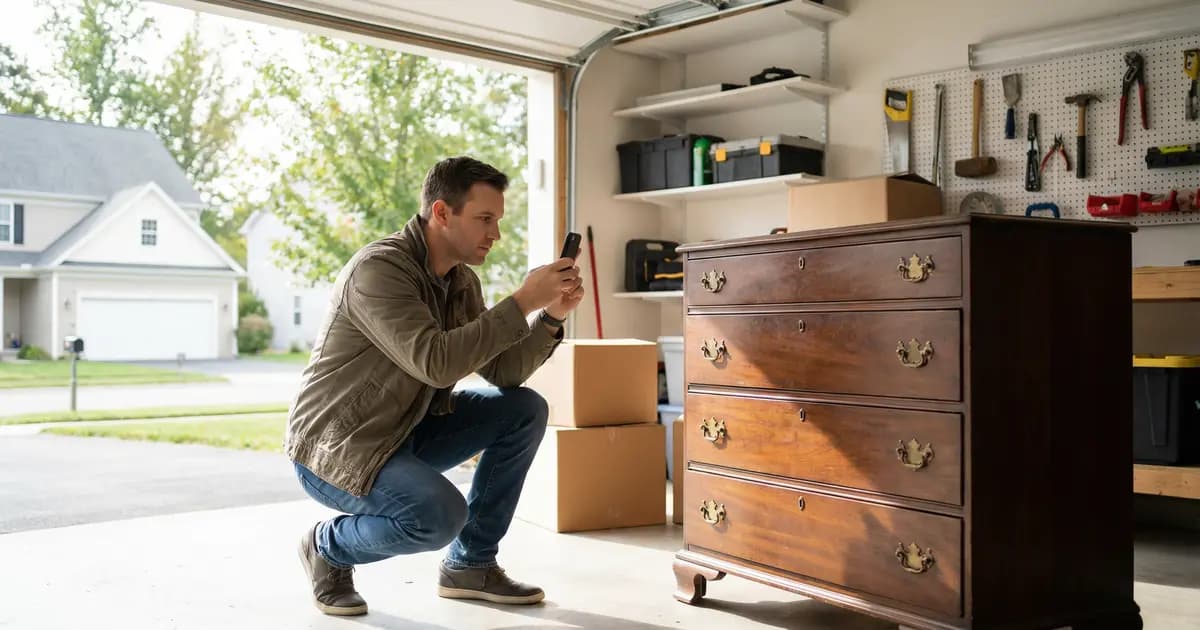
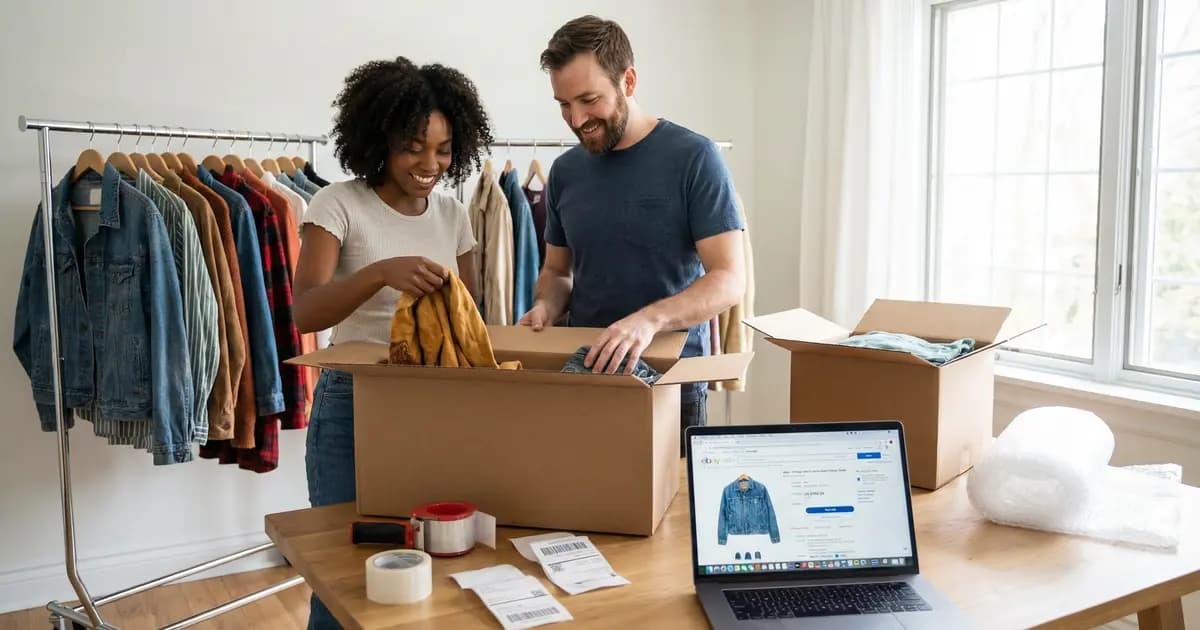
The secondhand economy has exploded into a $49 billion U.S. market growing five times faster than traditional retail. Whether you're decluttering your closet or building a serious side hustle, reselling offers a low-barrier entry into entrepreneurship with startup costs as low as $65—and profit potential ranging from a few hundred to several thousand dollars monthly.
The timing couldn't be better: 67% of consumers are now more willing to buy secondhand, economic uncertainty is driving deal-seeking behavior, and platforms have made selling easier than ever.
Why Reselling Works in 2025-2026
Online resale grew 23% in 2024 for the second consecutive year, with the U.S. market projected to reach $74 billion by 2029. Sustainability-conscious Gen Z shoppers now dedicate two of every five closet items to secondhand pieces, while 59% of all consumers say they'll seek secondhand if economic conditions don't improve.
The barrier to entry has never been lower. Platforms like Poshmark, Mercari, and Depop handle payment processing, provide shipping labels, and connect you with millions of active buyers. Cross-listing software enables posting to multiple marketplaces simultaneously.
The best part? Your closet is your first warehouse. You can start with inventory you already own.
Realistic Income Expectations
Part-time resellers typically earn $200-$2,500 monthly in profit depending on hours invested:
| Experience Level | Weekly Hours | Monthly Profit | Hourly Equivalent |
|---|---|---|---|
| Beginner (Month 1-3) | 5-10 | $100-$300 | $10-15/hr |
| Developing (Month 3-6) | 10-15 | $200-$500 | $15-20/hr |
| Experienced (Month 6-12) | 10-15 | $500-$2,000 | $20-35/hr |
| Established (Year 2+) | 10-20 | $2,000-$5,000+ | $30-50/hr |
The key factors separating successful resellers from those who quit: understanding which platforms match which products, sourcing profitable inventory consistently, and building efficient systems.
Choosing the Right Platforms
The eight major reselling platforms serve distinct markets. Matching your inventory to the right audience dramatically impacts sales velocity and profit margins.
Fashion Platforms
Poshmark dominates women's clothing with 80+ million active users and a social, community-driven approach.
- Fees: Flat $2.95 on sales under $15, 20% commission on higher sales
- Shipping: Prepaid $8.27 USPS Priority labels
- Best for: Brand-name women's fashion, accessories, handbags
- Pro tip: Sharing listings and participating in "Posh Parties" boosts visibility
Depop appeals primarily to Gen Z buyers seeking vintage, Y2K fashion, and streetwear.
- Fees: No selling fee for US sellers (since July 2024), only payment processing (3.3% + $0.45)
- Best for: Vintage, unique finds, streetwear, aesthetic items
- Pro tip: Instagram-style lifestyle photography performs best
Mercari offers the broadest category range with a straightforward interface.
- Fees: 10% selling fee (reintroduced January 2025), no payment processing fees
- Best for: Casual sellers, broad categories, home goods, electronics
General Marketplaces
eBay remains the largest global marketplace with hundreds of millions of active buyers.
- Fees: 12.9-15% plus $0.30-0.40 per order, 250 free listings monthly
- Best for: Electronics, collectibles, vintage items, niche products
- Pro tip: Auction format works well for rare items with uncertain market value
Facebook Marketplace provides zero fees for local pickup sales.
- Fees: 10% for shipped items (increased from 5% in April 2024)
- Best for: Furniture, large home goods, anything expensive to ship
- Pro tip: Local cash sales avoid fees but require safe meetup practices
Etsy serves the vintage market (items 20+ years old).
- Fees: $0.20 listing fee, 6.5% transaction fee, plus 3% payment processing
- Best for: Authentic vintage, unique collectibles
- Pro tip: Premium prices are possible with the right vintage pieces
Platform Selection Guide
| Category | Primary Platform | Secondary Options |
|---|---|---|
| Women's fashion | Poshmark, Depop | Mercari, eBay |
| Electronics | eBay | Facebook Marketplace |
| Vintage clothing | Depop, Etsy | eBay |
| Furniture | Facebook Marketplace | OfferUp |
| Sneakers | eBay, StockX, GOAT | Depop |
| Books | Amazon FBA | eBay (Media Mail) |
| Home goods | Mercari | Facebook Marketplace |
| Designer/Luxury | Poshmark, Vestiaire Collective | eBay, The RealReal |
Sourcing Inventory That Actually Sells
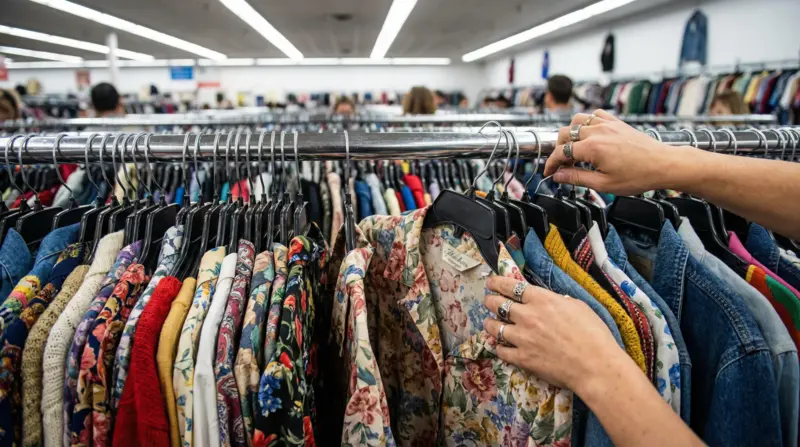
The difference between profitable reselling and an expensive hobby comes down to sourcing discipline. Every item you buy must have verified demand and sufficient margin after fees, shipping, and your time.
Thrift Stores: Your Foundation
Goodwill, Salvation Army, Savers, and local thrift stores offer the most accessible sourcing.
Best day to shop: Tuesday mornings. Weekend donations are processed, Monday shoppers have passed, and racks are freshest. Arrive at opening for first access.
Maximize savings:
- Most Goodwill locations use color-coded tags with 50%+ discounts midweek
- Senior discount days (often Wednesdays) stack additional savings
- Goodwill Outlet "bin stores" sell by weight at $1.49-2.00 per pound
What to look for:
- Feel for quality fabrics—premium items have distinct weight and texture
- Check brand labels and look for natural fibers (wool, silk, linen)
- Examine construction: metal zippers, quality stitching
- "Made in USA," Italy, or France labels often indicate higher-end pieces
Beyond Thrift Stores
Estate sales offer access to vintage furniture, jewelry, and decades of accumulated items. Find them through EstateSales.net and EstateSales.org. Target Day 2 or 3 when progressive discounts (25-50% off) increase margins.
Garage sales reward early arrivals and negotiation. The Yard Sale Treasure Map app helps locate sales. Bring small bills—bundling multiple items into a single offer increases leverage.
Retail arbitrage involves purchasing clearance merchandise from Target, Walmart, TJ Maxx, and Home Depot, then reselling at market price. The Amazon Seller app enables barcode scanning to check prices instantly.
Liquidation pallets from B-Stock, Direct Liquidation, and BULQ provide bulk access to customer returns. Expect 10-30% unsellable items. Start with smaller boxes to learn what works.
Items That Resell Well
Clothing brands: Lululemon (especially jackets and leggings), Patagonia, The North Face, Arc'teryx command $50-150. Premium designers (Gucci, Chanel, Prada) sell for $100+.
Vintage markers: Union labels (ILGWU, ACWA), single-stitched sleeves, and paper tags indicate pre-1990s pieces worth premium pricing.
Electronics: Vintage audio equipment (Technics, Pioneer, Marantz) has dedicated collector markets. Film cameras and vintage digital cameras with CCD sensors sell reliably.
Sneakers: Air Jordan 1s, Adidas Yeezy models, Nike SB Dunks, and Off-White collaborations command significant premiums. eBay's Authenticity Guarantee covers sneakers $75+ automatically.
Photography That Sells
Visual presentation directly impacts sale price and velocity. Professional-looking photos build trust and command premium prices.
Lighting and Background
Natural light from a large window provides free, high-quality lighting. Position your shooting area at a 90-degree angle to the window and turn off other room lights.
Use white backgrounds—poster board, foam core, or a bedsheet creates a professional sweep. Some platforms (Depop) favor styled lifestyle backgrounds, but white works universally.
Photo Requirements
Capture 8-12 photos minimum per listing:
- Hero shot showing the complete item
- Back view
- Brand label close-up
- Detail shots of texture or special features
- All flaws or defects (critical!)
- Measurements laid out
- Tags or authenticity labels
PhotoRoom (free) handles automatic background removal. Modern smartphones (iPhone 11+ or equivalent) produce sufficient quality—just clean the lens before every session.
Pro Tip: Photographing multiple items for resale? SellyGenie can analyze your product photos and generate professional listings in seconds, letting you focus on sourcing and shipping instead of writing descriptions.
Writing Titles That Get Found
Platform searches function like Google. The optimal title structure: [Brand] + [Product Name] + [Style/Model] + [Size] + [Color] + [Key Feature]
eBay data shows listings with 60+ characters sell 1.5x more than shorter titles.
Example transformation:
- Bad: "Beautiful Vintage Watch"
- Good: "Omega Seamaster Cosmic 135.016 Vintage Men's Watch Stainless Steel Manual Wind"
Research keywords using platform search bar autocomplete—these suggestions reveal what buyers actually search.
Pricing Strategy
Never price based on what you paid or what you hope to earn. Price based on actual sold data.
How to Research Prices
On eBay, filter search results by "Sold Items" to see completed sales (green = sold). Analyze 30-90 days of data:
- Average sold price
- Highest and lowest sales
- Time to sell
- Condition compared to yours
Terapeak Product Research (free in eBay Seller Hub) provides three years of sales data.
Pricing Psychology
- Prices ending in .99 or .97 convert well
- Round numbers ($50, $100) signal premium positioning
- New listings (under two weeks): hold firmer, maximum 10-15% discount
- Stale listings (30+ days): accept more flexible offers of 25-40% off
Always enable "Make Offer" features—many buyers won't purchase without negotiating.
Shipping Without the Headaches
Carrier Selection
| Carrier | Best For | Notes |
|---|---|---|
| USPS Ground Advantage | Most items under 5 lbs | 2-5 day delivery, affordable |
| USPS Media Mail | Books, CDs, DVDs | Cheapest option, contents may be audited |
| Priority Mail Flat Rate | Heavy small items | Price doesn't change with weight |
| UPS | Heavy packages (10+ lbs) | Competitive for distant zones |
Discount Rates
Pirate Ship (completely free) provides Commercial Plus rates offering 10-20% below USPS retail, plus Priority Mail Cubic pricing. Integrates with eBay, Etsy, and Shopify.
Platform-provided labels offer convenience but less flexibility. Compare rates for your specific scenarios.
Packaging
Free supplies:
- USPS provides free Priority Mail boxes and envelopes
- Request boxes from grocery and liquor stores
- Save Amazon boxes
Poly mailers ($0.10-0.30 each in bulk) work for clothing. Boxes with cushioning are required for fragile items and electronics.
Always weigh packages including all packaging materials. Incorrect weight destroys margins.
Tax Fundamentals
Reporting Thresholds
The 1099-K threshold was permanently restored to $20,000/200 transactions for federal reporting in 2025. Below this threshold, platforms don't report your sales to the IRS—but all income remains taxable regardless of whether you receive a 1099.
Self-employment income above $400 annually requires filing.
Deductible Expenses
Track these from day one:
- Cost of goods sold: Purchase price of inventory, shipping to you
- Platform and selling fees: eBay, Poshmark, Mercari fees; payment processing
- Vehicle mileage: 2025 rate is $0.70/mile for sourcing trips
- Home office: $5 per square foot (max $1,500), requires exclusive business use
- Equipment: Cameras, lighting, scales, computers, label printers
- Software: Inventory management, cross-listing tools
Keep records for seven years using apps like My Reseller Genie or Flippd.
Sales Tax
Marketplace facilitator laws mean platforms collect and remit sales tax automatically in 46+ states. You only become responsible for direct sales or if meeting economic nexus thresholds (typically $100,000+ in a state).
Building Systems That Scale
Time Management
Successful part-time resellers (10-15 hours weekly) allocate time strategically:
| Activity | Weekly Hours |
|---|---|
| Sourcing | 3-5 hours |
| Photography and listing | 3-4 hours |
| Shipping and packaging | 2-3 hours |
| Customer service | 1-2 hours |
| Administration | 1 hour |
Batch processing maximizes efficiency: dedicate specific days to sourcing, photograph all new inventory in single sessions, list in focused blocks, pack and ship at set times.
Cross-Listing
Cross-listing to 2-3 platforms multiplies buyer exposure. Tools like Vendoo, List Perfectly, and Crosslist automate posting to multiple platforms and auto-delist when items sell.
Inventory Organization
Lost items force cancelled sales. Set up systems from day one:
- Bin systems with numbered references
- SKU codes matching listing numbers
- Photo organization matching inventory locations
Common Mistakes to Avoid
Buying without research: Every purchase should be validated against sold comparables. Free or cheap doesn't equal profitable.
Ignoring total costs: Platform fees consume 13-20% of sale price. Add shipping, supplies, and cost of goods before calculating profit.
Single-platform selling: Cross-listing multiplies exposure at minimal extra effort.
Poor inventory organization: One cancelled sale due to lost inventory teaches this lesson permanently.
Quitting too early: Building momentum typically takes 6-12 months. Slow weeks are normal—consistent execution compounds over time.
What's Selling Now
Athleisure dominates: Lululemon tops resale charts, joined by Vuori, Alo Yoga, Nike, and Gymshark. Premium outdoor brands command consistent prices.
Luxury resale is booming: The authenticated luxury market grew 7% in 2024. Chanel and Gucci bags rank as the most-searched items.
Vintage remains hot: Y2K and 90s fashion sell strongly to younger buyers.
Sneaker margins have compressed: Profit margins dropped from 100%+ peaks to 10-25% for most releases. Emerging brands and women's sneakers offer opportunity.
The sustainability tailwind continues: 75% of Gen Z say sustainability matters more than brand names.
Frequently Asked Questions
How much money do I need to start reselling?
You can start with as little as $0-65 by selling items you already own. Your closet is your first inventory. Once you've made some sales, reinvest profits into sourcing more inventory. Basic supplies (poly mailers, scale, printer) cost $30-50. Most successful resellers recommend starting with no more than $50-100 in sourced inventory until you understand what sells.
Which platform should I sell on first?
Start with the platform that matches your inventory. For women's fashion and accessories, Poshmark or Mercari work best. For vintage or trendy clothing, try Depop. For electronics, collectibles, or varied items, eBay has the largest buyer base. For furniture and large items, Facebook Marketplace with local pickup avoids shipping entirely. Once comfortable, cross-list to multiple platforms.
Do I need a business license to resell items?
Requirements vary by location. Most casual sellers start as sole proprietors by default—no registration required, income reported on Schedule C. Many municipalities require home-based businesses to register once you're earning consistent income. Consider forming an LLC when making significant profits ($20,000+/year) for liability protection. A resale certificate from your state lets you buy inventory tax-free.
How do I know if an item is worth reselling?
Research before buying. Check eBay's "Sold Items" filter to see actual sale prices for similar items. The item needs to sell for at least 3x what you pay after accounting for platform fees (13-20%), shipping costs, and your time. Look for recognizable brands, quality materials, and items in good condition. When in doubt, start by selling items you already own to learn what sells.
How long does it take to make money reselling?
Most beginners see their first sale within 1-2 weeks of listing items. Breaking even on sourced inventory typically takes 1-3 months as you learn what sells. Consistent profit of $200-500/month usually develops by months 3-6. Building to $1,000+/month typically takes 6-12 months of consistent effort. The key is treating early months as learning investment rather than expecting immediate returns.
Start Today With What You Have
The reselling opportunity isn't theoretical—it's accessible immediately with inventory already in your closet. The $49 billion U.S. secondhand market provides proven demand. Platforms eliminate technical barriers.
Begin by listing 10-20 items you already own on Poshmark or Mercari. Research sold comparables before pricing. Take clean photos with good lighting. Respond promptly to questions.
This low-risk foundation teaches the fundamentals without requiring upfront investment. The sellers who succeed treat reselling as a business from day one: tracking expenses, researching before purchasing, and maintaining patience to compound results.
Ready to List Faster?
Creating listings for multiple items can be time-consuming. SellyGenie generates professional, optimized descriptions from your product photos in seconds, letting you focus on sourcing, photography, and shipping.