

Product descriptions on fashion marketplaces bridge the trust gap between stranger-sellers and buyers who can't touch the fabric. Research shows that 98% of consumers have abandoned a purchase due to insufficient product information, while listings with compelling descriptions see conversion lifts of 25% or more.
For sellers on Poshmark, Depop, eBay, Vinted, and Mercari, mastering description psychology isn't optional. It's the difference between a thriving closet and stagnant inventory. This guide covers the psychological triggers, platform-specific optimization, and fashion-specific language that turns browsers into buyers.
The Psychology Behind Fashion Purchases
The human brain makes 95% of purchasing decisions in the subconscious. Listings relying solely on specifications underperform those that engage emotions. Six psychological principles consistently drive conversions in fashion resale.
Scarcity Creates Urgency
Research shows that 65% of purchases are influenced by fear of missing out, and scarcity messaging increases conversions by 15-30%. For C2C sellers, one-of-a-kind inventory is a natural advantage.
Phrases that work:
- "Once it's gone, it's gone forever"
- "Rare find—took me months to source this"
- "From the 2004 collection—impossible to find now"
- "Sold out everywhere—this is your only chance"
Vintage and limited-edition items should always emphasize their irreplaceability.
Loss Aversion Outweighs Gain
Research established that losing something feels twice as painful as gaining something equivalent feels good. Frame descriptions around what buyers risk losing:
- Better: "Don't let this perfect fall jacket slip away"
- Weaker: "Great jacket for fall"
The shift from passive description to active consequence is subtle but powerful.
Price Anchoring Shapes Value
Anchoring original retail prices increases perceived savings by 32%. Every listing for a quality item should include a clear anchor:
- "Originally $298 at Nordstrom → yours for $89"
- "Retail: $175 | My Price: $55 | You Save: $120 (68%!)"
For items without clear retail references, compare to marketplace averages: "Similar styles on Poshmark averaging $XX."
Social Proof Compensates for Anonymity
Since C2C sellers lack brand recognition, social proof becomes critical. Products with just 5 reviews are 270% more likely to sell than those without.
Weave proof into descriptions:
- "200+ happy buyers in my closet with 5-star ratings"
- "5-star seller with fast shipping"
- "Several people have liked this item"
The Endowment Effect Creates Ownership
People value items more once they own them. Create ownership before purchase through visualization:
- "Picture yourself walking into brunch in this stunning dress"
- "This will become your favorite everyday bag"
Fashion benefits especially from this technique since clothing is inherently personal and identity-linked.
Emotional vs. Rational Appeals
Fashion purchases are fundamentally emotional, but buyers need rational justification. Lead with emotion to create desire, then support with facts to enable the purchase.
Match Language to Item Type
Statement pieces, vintage, occasion wear: Use aspirational language
- "You'll feel like the most stylish person in the room"
- "The power blazer that commands attention"
Practical staples, workwear, basics: Emphasize functional benefits
- "Boardroom-ready polish that transitions seamlessly to happy hour"
- "Machine washable silk look without the dry cleaning bills"
Identity-Based Selling
Fashion is self-expression. Phrases that align items with buyer identity convert strongly:
- "Perfect for the girl who loves effortless chic"
- "If you live for vintage finds, this is your piece"
Aesthetic categories provide ready-made identity hooks: cottagecore, quiet luxury, old money, Y2K, dark academia, coastal grandmother, and clean girl each signal specific values and lifestyles.
Storytelling Increases Value
Storytelling increases perceived value by up to 98%. Even brief narratives transform secondhand items:
- "I wore this to my best friend's wedding in Napa and got so many compliments—it's been carefully stored ever since"
- "This 1970s treasure comes from an estate sale—clearly beloved by its previous owner, now ready for its next chapter"
Pro Tip: Writing descriptions for multiple items can be time-consuming. SellyGenie analyzes your product photos and generates professional descriptions with the emotional hooks and details that convert, saving hours of work.
Platform-Specific Optimization
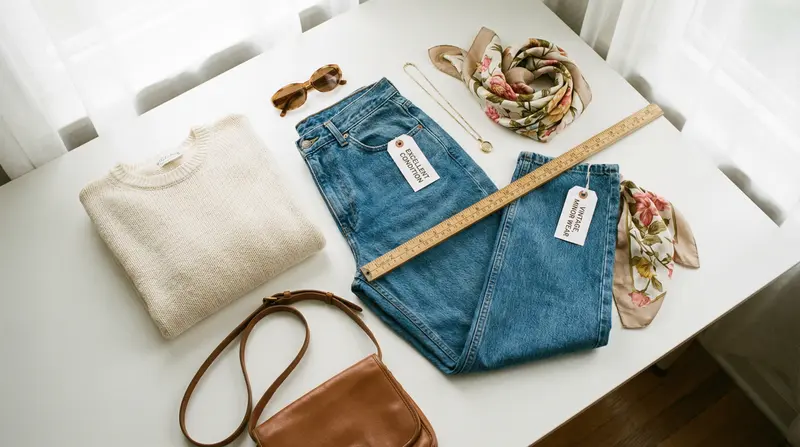
Each marketplace has distinct algorithm priorities, character limits, and audience expectations. Sellers who customize descriptions for each platform outperform those who copy-paste universally.
Poshmark
Algorithm focus: Sharing activity and keyword density
Poshmark's search pulls from titles AND descriptions, and its SEO extends to Google. The algorithm favors fresh activity: 94% of weekly sales go to sellers who listed or shared that week.
Descriptions should maximize searchable terms:
- Brand and style name
- Size, color, material
- Condition and fit notes
- Trending aesthetics
Poshmark's November 2024 update reduced the impact of irrelevant keyword stuffing, rewarding accuracy over manipulation.
Depop
Algorithm focus: Competitive pricing and visual content
Depop confirms that competitively priced listings at time of posting receive better visibility. Overpricing pushes listings lower in search.
Content optimization:
- Videos increase selling chances by 40%
- Listings with 4 photos are 20% more likely to sell within 30 days
- All 5 hashtags should use style-based trending terms (#y2k, #fairycore, #grunge)
The audience skews Gen Z (90%+ under 26), valuing unique finds, vintage, and streetwear.
eBay
Algorithm focus: Item specifics and seller performance
Beyond titles and descriptions, eBay prioritizes completion of all structured fields. The algorithm also considers seller feedback, shipping speed, and return rates.
Titles are limited to 80 characters. Pack maximum searchability:
- "Nike Men's Air Jordan 1 Retro Sneakers - Size 10.5 US, Black"
Unlike other platforms, eBay attracts deal-seekers and collectors. Detailed specifications matter more than lifestyle language.
Vinted
Algorithm focus: Recency and honest condition disclosure
Older listings drop in search results. Relist every 7-14 days to maintain visibility.
Optimization tips:
- Use 8-12 photos minimum with measurement shots
- Sunday evenings are peak selling time
- Honest condition disclosure reduces disputes
- BNWT items sell best
Mercari
Algorithm focus: Active inventory management
Character limits: 80 for titles, 1,000 for descriptions. Emojis are prohibited in both. Stock photos risk account bans.
All 5 hashtags should supplement (not repeat) title keywords. Relisting stale items every 2-3 weeks and responding to offers quickly improves ranking.
Sensory Language That Replaces Touch
Online fashion selling's fundamental challenge is replicating the sensory experience. Detailed descriptions that evoke sensation and guide fit expectations reduce returns and increase buyer confidence.
Fabric Vocabulary
Transform specifications into experiences:
| Fabric | Sensory Description |
|---|---|
| Silk | "Liquid silk that glides over skin and catches the light" |
| Cashmere | "Buttery-soft, cloud-like, featherweight warmth" |
| Denim | "Sturdy, perfectly broken-in, substantial weight" |
| Linen | "Breathable, textured, relaxed drape, perfectly imperfect" |
| Velvet | "Plush, touchable, rich with depth of color" |
| Leather | "Supple, buttery, worn-in patina" |
Fit Descriptions That Solve Problems
Instead of "fits true to size," describe the fit experience:
- "Skims the body without clinging"
- "Relaxed in the thigh with a tailored waist"
- "Generous cut allows room for layering"
- "High-rise stays put during any workout"
Address sizing quirks directly: "Please refer to measurements as [BRAND] tends to run small" or "Labeled size 8, but measures closer to a 6."
Measurements Are Non-Negotiable
Returns plague online fashion sales—24.5% of online apparel purchases are returned in the US, with fit issues being the primary cause.
Every listing should include flat-lay measurements:
Tops: Pit-to-pit, length, sleeve length
Bottoms: Waist, rise, hip, inseam, leg opening
Dresses: Bust, waist, hip, length
Format for scannability: "Measurements (flat lay): Chest 19" | Length 26" | Sleeve 24""
Include photos showing the tape measure on the item.
Condition Grading Terminology
The resale community uses established abbreviations:
| Term | Meaning |
|---|---|
| NWT | New with tags |
| NWOT | New without tags |
| EUC | Excellent used condition |
| VGUC | Very good used condition |
| GUC | Good used condition |
Use these terms AND explain them: "Condition: EUC — worn twice, no visible flaws."
Acknowledging minor flaws increases trust in positive claims. "Small mark on hem—see photo 4" makes "pristine silk with no other flaws" more believable.
Description Frameworks That Convert
Copywriting frameworks provide scaffolding for consistent, high-converting descriptions.
AIDA (Attention, Interest, Desire, Action)
Best for emotional fashion pieces:
- Attention: "Turn heads at your next event in this rare 90s Versace silk slip dress"
- Interest: "Authentic vintage find with stunning bias cut and delicate spaghetti straps"
- Desire: "Picture yourself making an entrance—the silk drapes beautifully and catches the light"
- Action: "Bundle with another item for 20% off! Ships same day"
PAS (Problem, Agitate, Solution)
Best when items solve frustrations:
"Tired of high-waisted jeans that gap at the waist? We've all been there—constantly pulling up jeans that won't stay put. These Madewell Curvy Perfect Vintage Jeans are designed specifically for curves—no gap, no discomfort, just perfect fit."
FAB (Features, Advantages, Benefits)
Best for technical items:
- Features: Lululemon Align Pant 25", Size 6, 81% Nylon, 19% Lycra
- Advantages: Buttery-soft Nulu fabric feels like second skin, high-rise stays put
- Benefits: Feel confident and supported in yoga class or running errands
Universal Template Structure
- Opening hook (1-2 sentences of lifestyle/emotional appeal)
- Essential details (condition, material, features in scannable format)
- Measurements (with flat-lay notation)
- Condition notes with flaw disclosure
- Closing CTA (bundle discount, ship time, thank you)
Common Mistakes That Kill Conversions
Vague Descriptions
"Cute dress, size M, worn once" tells buyers nothing. They won't message to ask—they'll scroll to a competitor.
Better: "Dynamite High Waisted Denim Shorts Light Wash Size 6 Distressed" includes brand, style, color, size, and details.
Missing Measurements
Sizes vary dramatically between brands, eras, and production runs. A vintage size 8 measures completely differently than a modern size 8. Every listing needs actual measurements, not just tag size.
Hidden Flaws
Buyers who discover undisclosed stains, pilling, or wear leave negative reviews and request returns.
Better approach: "Small stain on left hem—see photo 4, priced accordingly"
Include a "cover your bases" statement: "I've examined this closely, but as it's pre-owned, there may be minor imperfections I've missed. Please review all photos."
Keyword Stuffing
Platforms increasingly penalize irrelevant keyword spam. Titles stuffed with unrelated terms ("dress vintage boho cottagecore y2k grunge streetwear") signal desperation rather than relevance.
Stale Listings
Most platforms favor recency. Refresh stale inventory every 1-3 weeks to maintain search position.
Building Trust as an Individual Seller
C2C marketplaces require buyers to trust strangers with their money. Every listing element should contribute to trust.
Transparency Signals Integrity
Upfront flaw disclosure, referenced photos, honest sizing notes, and clear condition grading tell buyers you have nothing to hide.
Specificity Signals Expertise
Detailed measurements, material percentages, care instructions, and style numbers demonstrate you know what you're selling.
Responsiveness Signals Reliability
"Questions? I respond within hours!" reduces buyer anxiety. On platforms like Depop where algorithm ranking considers response speed, fast replies also improve visibility.
Consistency Signals Professionalism
Using templates, maintaining photo styling, and presenting a cohesive closet aesthetic builds seller brand recognition.
Social Proof Signals Safety
Reference your ratings and sales: "400+ sales, 5-star average" or "Posh Ambassador" tells buyers others have trusted you successfully.
Frequently Asked Questions
How long should a clothing product description be?
Research recommends 150-400 words for most products. Simple items need 125-150 words while complex or high-value pieces benefit from 350-400 words. However, only 16% of users read text word-for-word—they scan. Use bolded key details, clear formatting, and visual hierarchy. On mobile, the first 145-180 characters matter most since that's what displays without clicking "Read more."
What should I include in a clothing listing description?
Every fashion listing should include: brand and style name, size (tag size AND actual measurements), color and material, condition using standard terms (NWT, EUC, etc.), specific flaw disclosure with photo references, fit description, care instructions if relevant, and a closing call-to-action. Front-load emotional hooks to create desire, then follow with specifications to enable the purchase decision.
How do I describe the condition of used clothes?
Use standard resale abbreviations: NWT (new with tags), NWOT (new without tags), EUC (excellent used condition), VGUC (very good used condition), GUC (good used condition). Then explain specifically: "EUC—worn twice, no visible flaws" or "VGUC—light pilling at underarms, see photo 3." Acknowledging minor flaws actually increases trust in your positive claims.
Should I use the same description on all platforms?
No. Each platform has different algorithm priorities, character limits, and audiences. Poshmark rewards keyword-rich descriptions and daily sharing. Depop prioritizes competitive pricing and video content. eBay values complete item specifics over lifestyle language. Mercari prohibits emojis. Vinted requires fresh listings for visibility. Customize your approach for each platform's unique requirements.
What measurements do I need to include for clothes?
Measurements vary by garment type. For tops: pit-to-pit (bust), length from shoulder, and sleeve length. For bottoms: waist, rise (front and back for jeans), hip, inseam, and leg opening. For dresses: bust, waist, hip, and total length. Always measure flat-lay and note that in your description. Include photos showing the tape measure on the item for verification.
Ready to Write Descriptions That Sell?
The most effective fashion listings integrate psychology, platform mechanics, and fashion expertise into descriptions that reduce buyer risk while increasing buyer desire.
Lead with emotion to create desire, support with specifics to enable purchase, format for scannability, disclose honestly to build trust, and close with value-adding calls to action.
If you're listing multiple items, writing optimized descriptions for each one is time-consuming. SellyGenie analyzes your product photos and generates professional descriptions with emotional hooks, detailed specifications, and the sensory language that converts browsers into buyers.